
Arena Surfaces Built for Consistent Footing
Equestrian Grading in Southwest Florida for horse arenas requiring proper drainage and stable riding surfaces
Riding arenas that hold water after rainfall or develop uneven footing create safety risks for both horses and riders. FL Patriot Grading provides equestrian grading services in Ft Myers, and Naples that establish the precise slope and base compaction needed for arenas that drain within hours of heavy rain while maintaining consistent surface firmness. The combination of Florida's high water table and frequent summer storms means arena construction must address subsurface drainage and surface grading as interconnected systems rather than separate elements.
Horse arena grading begins with excavating the footprint to a uniform depth, installing a compacted base layer that prevents settling, and creating a crown or slope pattern that moves water off the surface without creating low spots where puddles form. The finished grade provides a stable foundation for footing materials like sand or specialized arena mixes that require consistent support to perform correctly under hoof impact.
Arrange an on-site evaluation to assess your property's existing drainage patterns and determine the base preparation your arena requires.
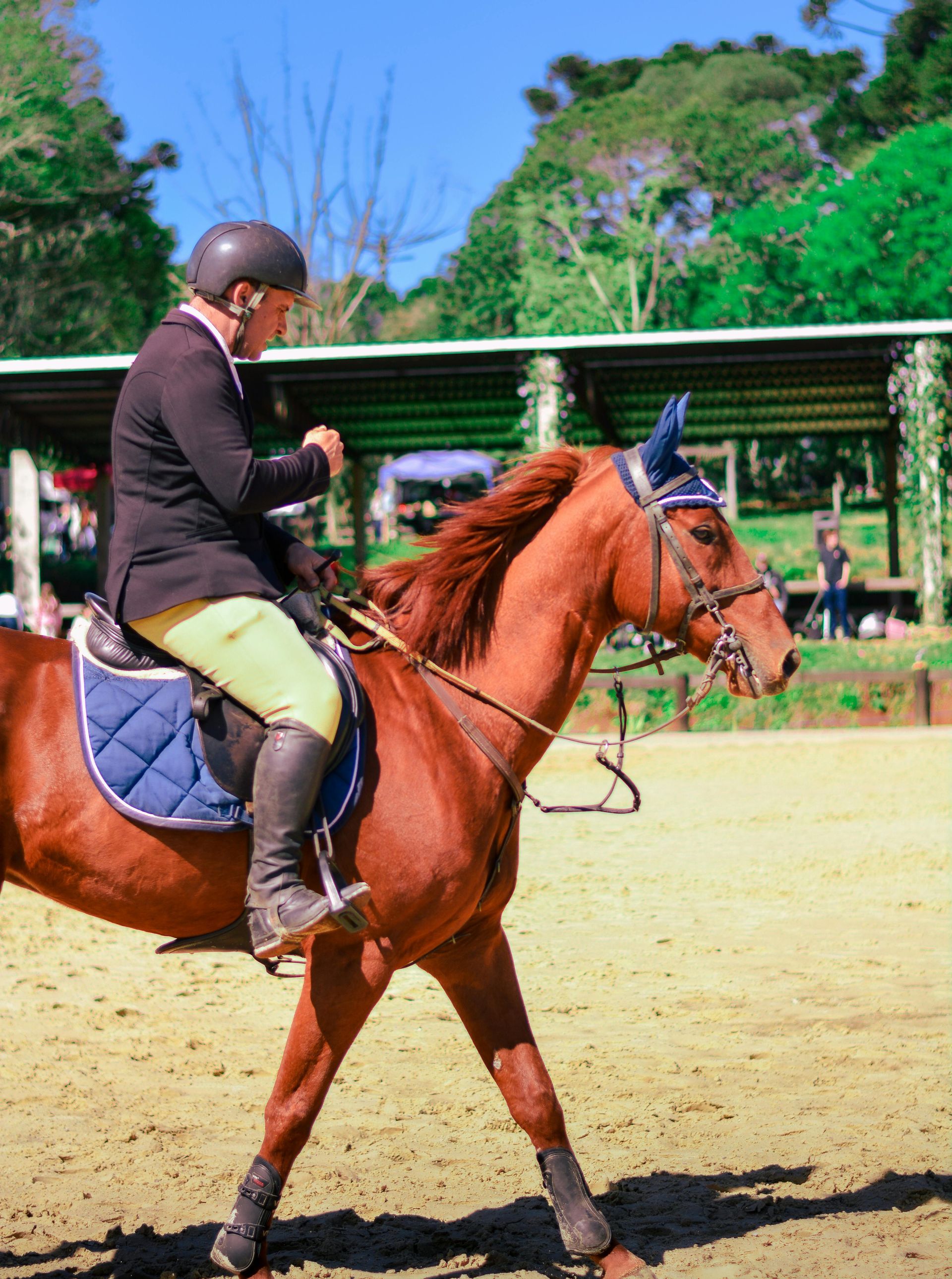
Proper arena construction removes organic topsoil and unstable fill, then places a crushed limestone or shell base in lifts that are compacted to ninety-five percent density. This base layer sheds water downward into perimeter drainage while resisting compression under repeated hoof traffic. The final surface grade typically slopes at one to two percent toward designated drainage points, a gradient subtle enough that riders don't notice the incline but sufficient to prevent standing water after storms that deposit three inches of rain in an afternoon.
After grading is complete, you notice water moving visibly toward arena edges during rainfall rather than pooling in the center or corners. The firm base prevents the soft spots and ruts that develop when footing materials mix with unstable subgrade, and the crowned surface means you can resume riding within a few hours of weather clearing instead of waiting days for saturated areas to dry.
Arena dimensions, footing depth requirements, and perimeter fencing setbacks all influence the grading approach. Standard dressage arenas measuring twenty by sixty meters require different drainage solutions than larger jumping arenas, and properties with high water tables may need French drains or curtain drains installed around the perimeter to intercept groundwater before it saturates the base layer.
How Arena Grading Addresses Drainage and Surface Stability
Common Questions About Horse Arena Construction
Arena grading in Ft Myers, and Naples must account for the region's seasonal water table fluctuations and soil conditions that affect long-term surface performance.
- What base depth does a riding arena need in Southwest Florida?
- Most arenas require a minimum six-inch compacted base layer, though properties with poor native soil or high water tables may need eight to twelve inches of base material to provide adequate support and prevent the subgrade from pumping up through the footing during wet periods.
- How does grading prevent water from pooling in the arena?
- The surface is crowned from the center toward the long sides or sloped uniformly from one end to the other, creating a gradient that directs runoff toward perimeter drainage features such as French drains or graded swales that carry water away from the riding area.
- When is the best time to grade an arena in this climate?
- Dry season months from November through April offer the most stable soil conditions for excavation and compaction, reducing the risk of equipment rutting the site and allowing base materials to cure properly before footing is placed.
- What determines whether an arena needs subsurface drainage?
- Properties where the water table rises within three feet of the finished arena surface during rainy season typically need perimeter drains to intercept groundwater, while well-drained sites on higher elevations may only require proper surface grading and a compacted base.
- How long does the grading process take for a standard arena?
- Excavation, base installation, and final grading typically span several days depending on site access and weather, with larger arenas or those requiring extensive drainage systems needing additional time for proper base compaction and drainage testing.
FL Patriot Grading builds arena foundations designed for the drainage challenges and soil conditions found throughout Southwest Florida's equestrian properties. Contact our team to discuss your arena dimensions and site-specific grading needs based on your property's elevation and water table depth.